Blogia
Basurde Xiao Long

Libros

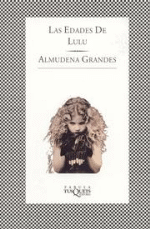
Libros: ¨Las edades de Lulú¨ -Almudena Grandes-

Libros: ¨Las edades de Lulú¨ -Almudena Grandes-

De esta escritora me había leído un par de libros. En la universidad me leí ¨Malena es un nombre de Tango¨, y en Dubai cayó ¨El corazón helado¨. En la escuela contamos con una extensa biblioteca en español, y echándo un vistazo me topé con esta novela. Sabía que había sido llevada al cine, pero tampoco he visto la película.


Se encuadra dentro del género erótico, y por ello recibió en su día el XI Premio la Sonrisa Vertical. Respecto al nivel de erotismo… decir que es bastante bastante elevado: prostitución, gays, trios, sadomasoquismo, incesto… toca todos los palos de la baraja, de una manera totalmente explícita y directa.


Después de leerla, siendo considerada una novela erótica, me pregunto cuál es la diferencia entre el erotismo y la pornografía. Para ello, nada mejor que ir al diccionario de nuestra querida R.A.E.


Erótico: Perteneciente o relativo al amor sensual.

Sensual: Perteneciente o relativo a las sensaciones de los sentidos.


Pornografía: Carácter obsceno de obras literarias o artísticas.

Obsceno: Impúdico, torpe, ofensivo al pudor.


Analizadas las dos definiciones, me decantaría más por la última para encuadrar el género de este libro. Obscena, en cuanto a la falta de recato y que sin duda puede sacar los colores a personas pudorosas. Torpe en absoluto, ya que la autora es todo lo contrario, excesivamente hábil encontrando las palabras y marcando el ritmo de la historia.


Es interesante ver la evolución sexual de esta niña de 15 años, hasta que cumple los 30. Pero no penséis en una niña normal. Esta es más una de las protagonistas de las que Doctor Deseo nos habla en muchas de sus canciones. Si hubiera sido el director de la película, en la banda sonora no habría faltado esta canción de ese gran grupo:


¨La niña que entre sabanas y sueños

juega con caricias,

respira pecados.

Estrella y guionista

de historias prohibidas

con sabor a piel.¨


¨Suspira… y conspira¨ -Doctor Deseo-


En el lenguaje vulgar y soez de hoy en día diríamos que Lulú está bastante salida.


El que busque pornografía en este libro hallará pornografía. El que busque una historia de amor, encontrará una historia de amor. El que busque literatura hallará literatura. El que esté interesado en los últimos coletazos de la España franquista y los movimientos revolucionarios de entonces se encontrará con una descripción del entorno social, concretamente en Madrid, muy detallada. En definitiva, que sería de necios decir que esta es una novela sobre sexo. Es una historia, bien contada, en el que el ¨underground¨ del sexo queda bastante patente. 

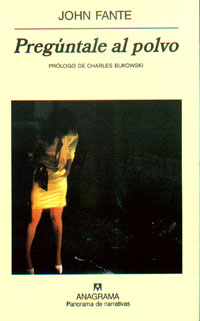
Libros: ¨Pregúntale al polvo¨ -John Fante-

Libros: ¨Pregúntale al polvo¨ -John Fante-


Después de volver de Corea del Norte me empecé este librillo. ¡Qué rabia me dio no habermelo llevado conmigo al viaje! Cuando voy de vacaciones siempre me suelo llevar más de un libro, para estar servido en el avión, en el tiempo libre y por las noches. Sin embargo cuando monté en el taxi para ir al aeropuerto me di cuenta ¨¡mierda, me he dejado los libros en la mesa!¨. Estuve leyendo un poco ¨The Color Purple¨ que me dejó una irlandesa que iba en el grupo, pero no lo llegué a terminar. En inglés no los disfruto tanto.


Este es un libro con el que tenía una cuenta pendiente, ya que me lo había recomendado una persona que me causó muy buena impresión hace más de dos años. Esta es la historia. Exactamente un 3 de julio de 2007 estaba yo sentado en un restaurante a orillas del río, en Vientiane, la capital de Laos. Se sentó cerca un tipo, y cuando abrí la boca para pedir el menú enseguida captó mi inevitable acento español. Nos sentamos a comer a las 3 de la tarde, y como ninguno de los dos teníamos prisa estuvimos bajando Beerlaos y hablando de historias, de libros, de películas, de drogas, de música, de templarios, de religiones, y de temas habidos y por haber.  En muchos asuntos yo solo escuchaba, porque mi interlocutor sabía bastante bien de lo que hablaba, y los temas eran muy interesantes. El caso es que fuimos a cenar, y de ahí de fiesta con otra gente que nos encontramos. Entre una cosa y otra, volví a casa 12 horas más tarde después de visitar –y cerrar- unos cuantos garitos.


Charlando de literatura me dijo que uno de los libros que seguro que me gustaría leer, por lo que habíamos hablado, era ¨Pregúntale al Polvo¨, de John Fante. Entre una cosa y otra lo fui dejando pasar, pero por fin este verano, matando el tiempo en una librería me acordé del título y lo compré. Después de leerlo creo que me lo recomendó porque salió Bukowski a la palestra.


La historia trata de un personaje que quiere ser escritor en Los Ángeles de los años 30. Narra las miserias de este sujeto, un elemento bastante egocéntrico y cabrón, con el que pese a su comportamiento mezquino vas simpatizando cada vez más. La narración al principio no me llamó mucho la atención, pero a medida que te metes en su vida te va enganchando más y más. ¡Muy divertido, el tal Arturo Baldini!

--------------

En otro orden de cosas. Oprah Winfrey, una presentadora de las tertulias de las tardes estadounidenses, tiene lo que llama el Oprah´s Book Club. Debido a la popularidad de esta periodista en yankeelandia, si un libro entra en ese selecto club quiere decir que las ventas van a subir automáticamente.


Si existiera el Basurde´s Book Club, uno de los libros que seguro que entraría en mi top-ten sería ¨La Reina del Sur¨, de Arturo Pérez-Reverte. Comienza con la frase más impactante de la literatura mundial. Diez palabras.

¨Sonó el teléfono y supo que la iban a matar¨.

Me encanta este libro, probablemente porque estoy algo familiarizado con los ambientes en los que se desarrolla la historia, en México, en Marruecos y en España, y porque el tema que trata –el narcotráfico- también me apasiona. ¨La Reina del Sur¨ narra la historia de Teresita Mendoza, y yo daba por hecho, por el final de la historia y por el narcocorrido del mismo nombre de ¨Los Tigres del Norte¨, que se trataba de un personaje real. Pero leyendo ayer el último artículo de Reverte en El Semanal, he visto que he caído como un pichón.

 Aún así, y ante la duda, seguiré creyendo que existe y que está viva en algún lugar :-) 


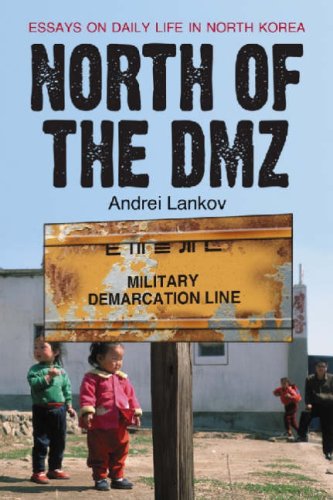
Books: ¨North of the DMZ – Essays on Daily Life in North Korea¨ -Andrei Lankov

Books: ¨North of the DMZ – Essays on Daily Life in North Korea¨ -Andrei Lankov

This is the third book I read before going to North Korea. The author, Andrei Lankov, is a Russian writer who currently works at the Kookmin University  in Seoul. He is a specialist in Korea, having studied in the North and lived in the South, where he is also a columnist for The Korea Times, the oldest English-language newspaper published daily in South Korea.


Through short essays he explains different aspects of the life in North Korea: education, work, political system, transportation, etc. By the time you finish the book, you have a clear idea about what that society looks like, without having to travel there.


In the last pages he talks about the little changes that are happening, and how with time, the Stalinism in North Korea will die.


As they are short essays it is very easy to read, and it should be mandatory to anybody who is interested in really seeing what is going on in that country, in that society.


Finally, an important idea that the author wants to highlight is that no matter how tough the situation and a government can be on you, the people still need to go through their daily lives, and try to live them as fully as possible. 

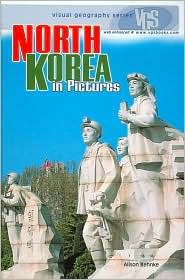
Books – North Korea in Pictures

Books – North Korea in Pictures

I read a comic book about a person who lived in Pyongyang making an animated movie, I read a book about the Korean war, I read another about articles of a Russian journalist who is specialist in both Koreas, and the last one that I had to read, to have a global vision of my next destination, was this one: North Korea in pictures. Even though it looks like a book of photos, by its title, it is not. There are pictures, of course, but it is a book aim for students that reveals the history, government, economy, geography, and cultural life of North Korea.


This is the content:

1.- Introduction

2.- The land

- Topography

- Rivers and Lakes

- Natural Resources and Environmental Challenges

- Climate

- Flora and Fauna

- Cities

3.- History and Government

- Ancient Chosun

- Silla Dynasty

- The Koryo Kingdom

- Chosun Dynasty

- Social and Economic Upheaval

- International Involvement

- Under Japan

- Communist Beginnings

- Division

- The Korean War

- Rebuilding

- Kim´s Korea

- Mounting Challenges

- A Nuclear Nation?

- Gradual Opening and Ongoing Struggles

- Government

4.- The people

- Social Structure

- Housing and Health

- Human Rights

- Language

5.- Cultural Life

- Religion

- Holidays and Festivals

- Food and Dress

- Visual Arts

- Literature and Film

- Music and Dance

- Sports

6.- The Economy

- Industry and Trade

- Military Spending and Weapons Production

- Agriculture, Forestry, and Fishing

- Service Sector

- Infraestructure

- The future

7.- For more information

- Timeline

- Fast Facts

- Currency

- Flag

- National Anthem

- Famous People

- Sights to See

- Glossary

- Selected Bibliography

- Further Reading and Websites

- Index

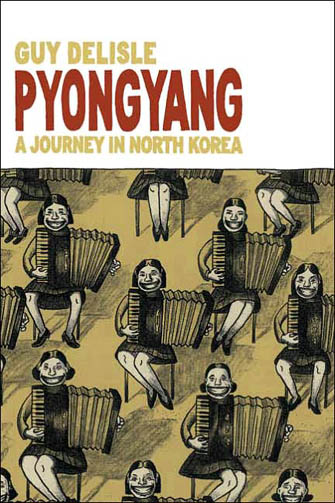
Books - ¨Pyongyang. A journey in North Korea¨ -Guy Delisle-

Books - ¨Pyongyang. A journey in North Korea¨ -Guy Delisle-

Planning my trip to North Korea, I checked out a lot of books from the school´s library. One of them was a graphic novel, drawn by Guy Delisle, a Canadian author. He spent two months working in DPRK, and he describes his life there and all that calls his attention in this peculiar country.


I finished the book on August 26, but I didn´t want to publish anything about North Korea until coming back. Journalist are not welcome in that country, and I didn´t want to give anybody there the little chance of thinking so.


Great and easy way to learn a little bit about the life in North Korea, before travelling there. More info here:

http://en.wikipedia.org/wiki/Pyongyang_(comics)

Books: The Korean War

Books: The Korean War

I didn´t know much about North Korea before, but reading this book gave me a clear view of what happened in between the north and the south.


Korea was under Japanese control since 1910. When it surrender in August 1945, U.S. troops landed in southern Korea, and Soviet troops did the same in the northern part. Both countries with totally different ideas. They wanted a united Korea, but the gringos wanted a capitalist society, while our red friends wanted a communist state. Obviously they classed.


North Korea and South Korea formed their own governments in 1948, but neither side was willing to accept that the whole Korea was no longer one nation. Fighting between the north and south only intensified after U.S. and Soviet troops left the region in 1949.


On June 25 1950 thousands of North Korean soldiers invaded South Korea, to reunite the country under communist rule. Three days later they took Seoul and continued to move south. Soon the U.S. got involved, and they were able to fight the invasion, not only sending the North Koreans back, but also invading their own territory. On October 19 the allies took Pyongyang, and continued north, close to the border with China. That is when the Chinese army entered the war, on the side of North Korea. And they retook Seoul, in 1951. Again the allied forces recapture Seoul, and pushed the communist troops back to the thirty-eight parallel.


The war finish in 1953, being one of the bloodiest ones.


I found this book very interesting, because it was like reading a novel. A fiction novel, as you start learning about the characters, the armies, how they attack and repel they attacks, etc. It is a history book, but I had the feeling of reading a novel, because anxiously I was waiting to see ¨What is next!¨.


Sad history, by the way. Could have that happened in Spain. Could we have had, after the civil war, a ¨España del Norte¨ and ¨España del Sur¨, one being socialist and the other capitalist? Difficult in Western Europe, but it is interesting to think about it.  


The Korean War

(Wars that changed American history)

by Robin Doak

Published by World Almanac Library

Libros: ¨La chica que soñaba con una cerilla y un bidón de gasolina¨ -Stieg Larsson-

Libros: ¨La chica que soñaba con una cerilla y un bidón de gasolina¨ -Stieg Larsson- Segundo libro de la Trilogía Millennium, tan bueno o más que el primero. Un tocho enorme al que al peso le calcularía yo un mes y medio de lectura, pero que me lo he terminado en 10 días. Eso lo dice todo.

Tenía muy fresca la historia y los personajes del primero, ¨Los hombres que no amaban a las mujeres¨, y eso también ayuda, porque los protagonistas volvían a ser los mismos.

Podría ser llevado al cine sin ninguna dificultad. En todas las novelas el lector se hace sus imágenes en la cabeza, de como visten los personajes, de los lugares donde transcurre la acción, de la personalidad de cada uno, de lo que piensan y donde viven. El autor una vez más describe todo con profusion, y sin haber estado antes en Suecia parece que ya me imagino como son las casa, el tráfico, las oficinas, el tiempo…

Es increible que una historia logre mantenerte en vilo durante tanto tiempo. Además, con el final no solo logra resolver la trama sino hacer que desees leer el tercero… ¡ya!

Libros: ¨Los hombres que no amaban a las mujeres¨ -Stieg Larsson-

Libros: ¨Los hombres que no amaban a las mujeres¨ -Stieg Larsson-

¡Pasada de libro! Me ha encantado, y he devorado las casi 700 páginas en un tris. Afortunadamente mi cuñada no solo me regaló éste en verano, sino también el segundo de la Trilogía Millenium, ¨La chica que soñaba con una cerilla y un bidón de gasolina¨, que acabo de empezar. El primero que venga por Shanghai… que me vaya trayendo el tercero ☺